





 Optimized for tablets and smartphones
Don’t miss…
Don’t miss…
North Parterre
The North Parterre, situated in front of the King's Grand Apartment, is surrounded by eighteen sculptures, of which fifteen date back to the great commission of 1674. The iconography evokes the myth of Apollo and his nurturing and influential journey around the globe.
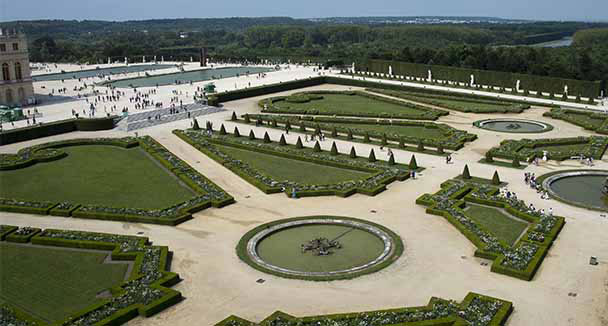
Water Garden
The Water Garden appears to be an extension of the facade of the Palace. Their layout was modified several times before receiving its definitive form, in 1685. Each pool is decorated with statues of lying-down figures representing the rivers of France, accompanied by nymphs and children.
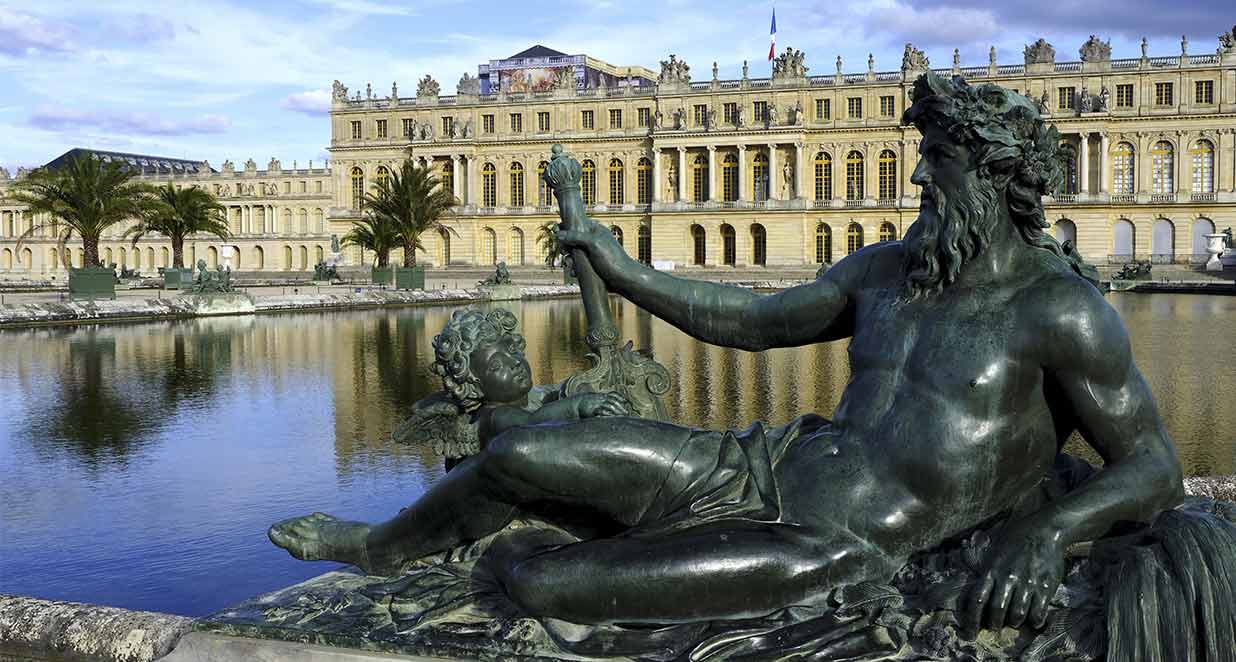
South Garden
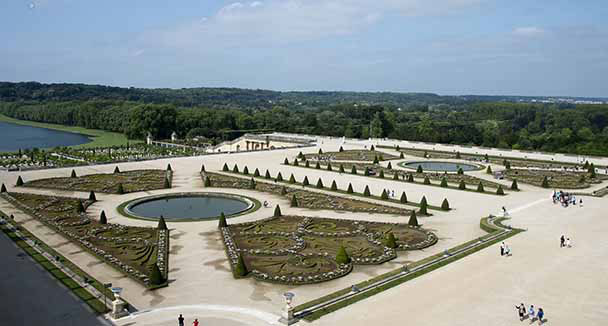
Formerly known as the Flowers Parterre, the South Garden is situated above the Orangerie. During the reign of Louis XIV, brightly-coloured flowers were continually planted and replanted here: wallflowers, hyacinths, jasmine, tulips...
The Orangery Garden
Dragon Fountain
The Dragon Fountain represents an episode from Apollonian legend: The young Apollo kills the serpent Python with an arrow. The reptile is surrounded by dolphins and Cupids with bows and arrows, riding on swans. The main fountain reaches twenty seven metres in height.

Latona's Fountain
On the app, scroll down to interact with this sculpture thanks to AI!
Apollo’s Baths Grove
The Girandole Grove
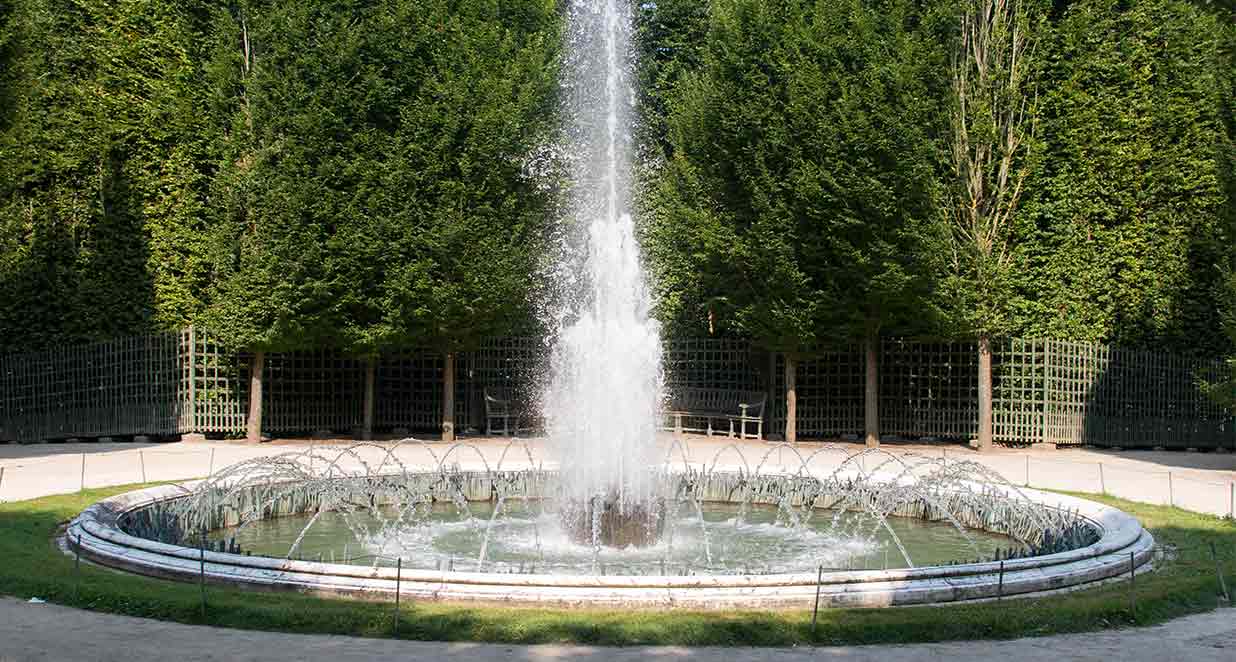
The Dauphin’s Grove
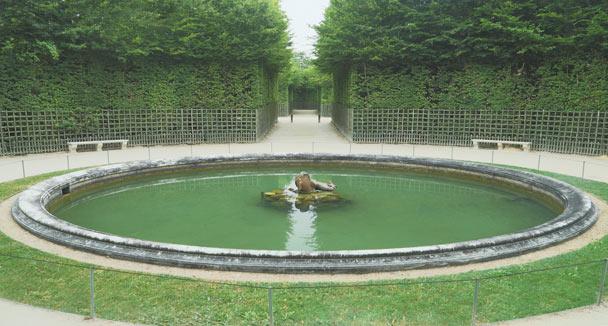
Apollo's Fountain
On the app, scroll down to interact with this sculpture thanks to AI!
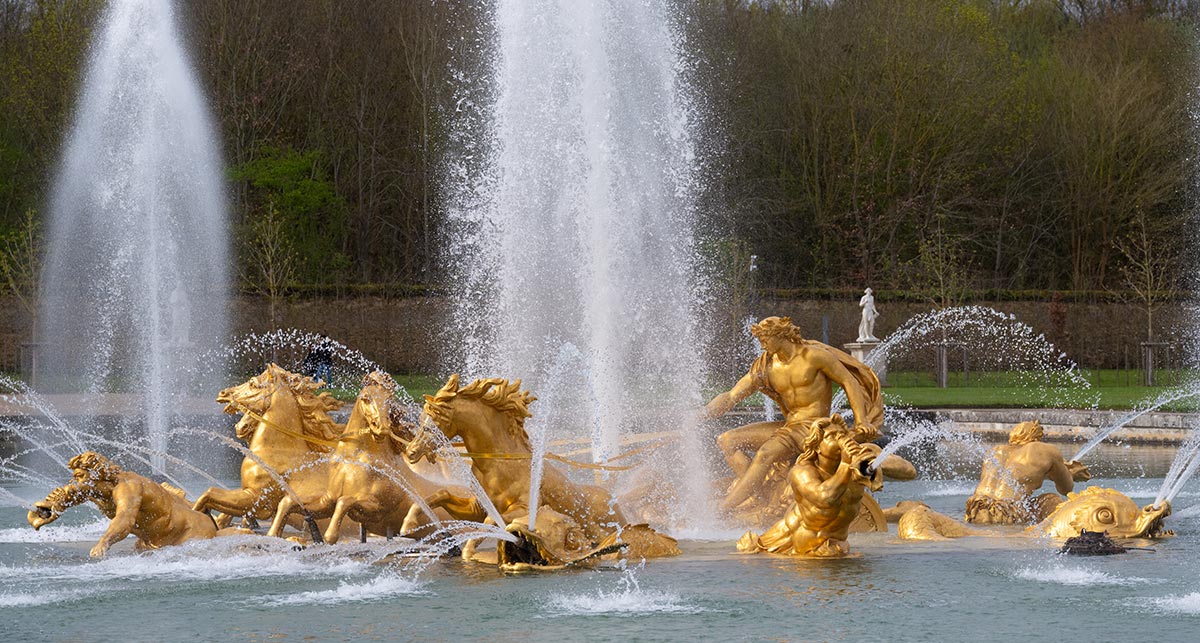
Neptune Fountain
On the app, scroll down to interact with this sculpture thanks to AI!
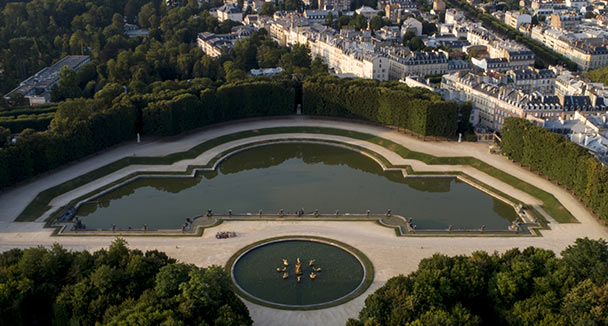
Flora Fountain
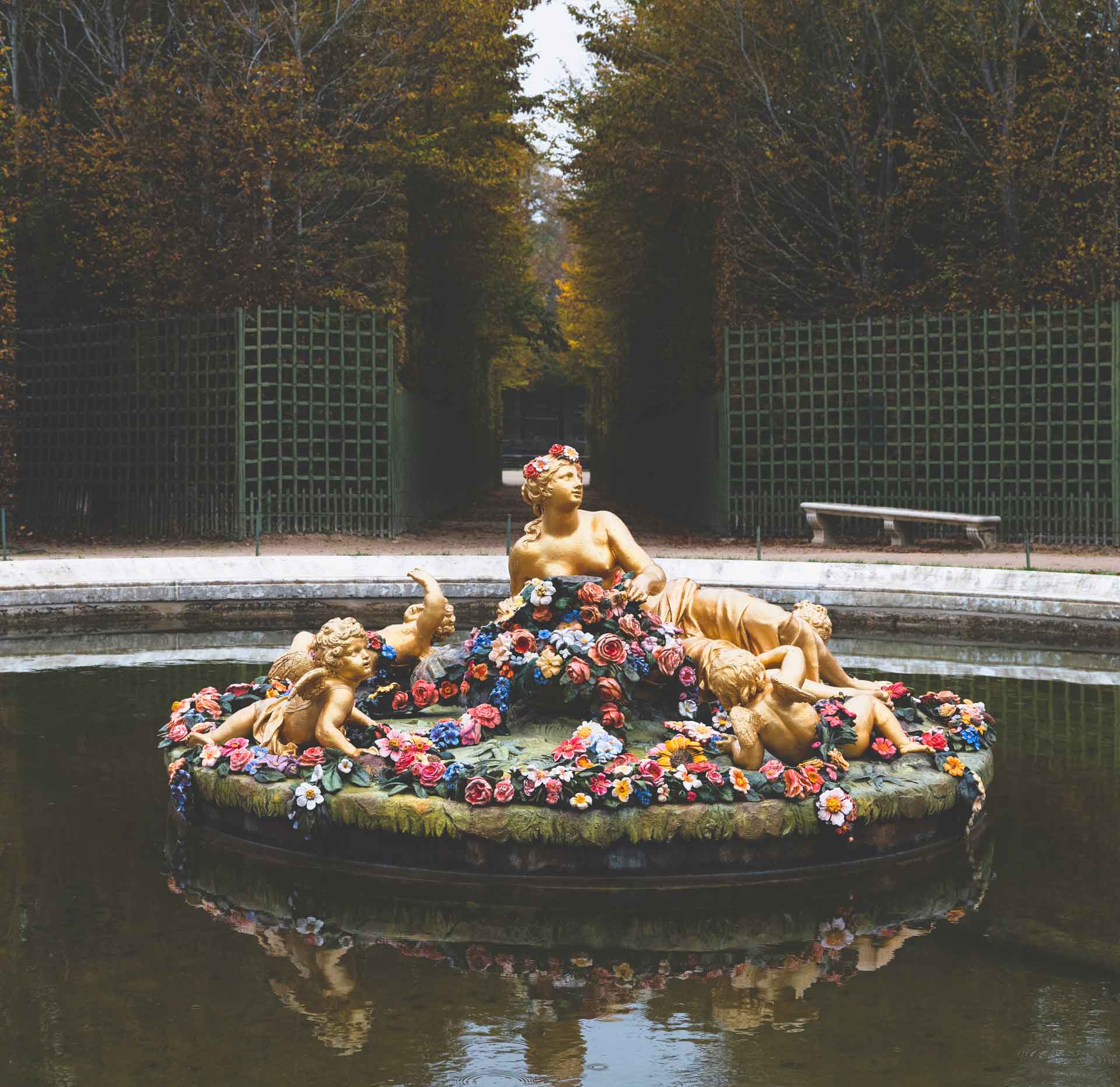
The Flora Fountain is located at the crossroads of several groves, including the Queen's Grove. Flora is the Roman goddess of flowers, gardens and springtime, and the fountain symbolises the first season of the year. Sculpted by Jean-Baptiste Tuby, the goddess can be found at the centre of the fountain, wearing a floral crown.
Saturn Fountain
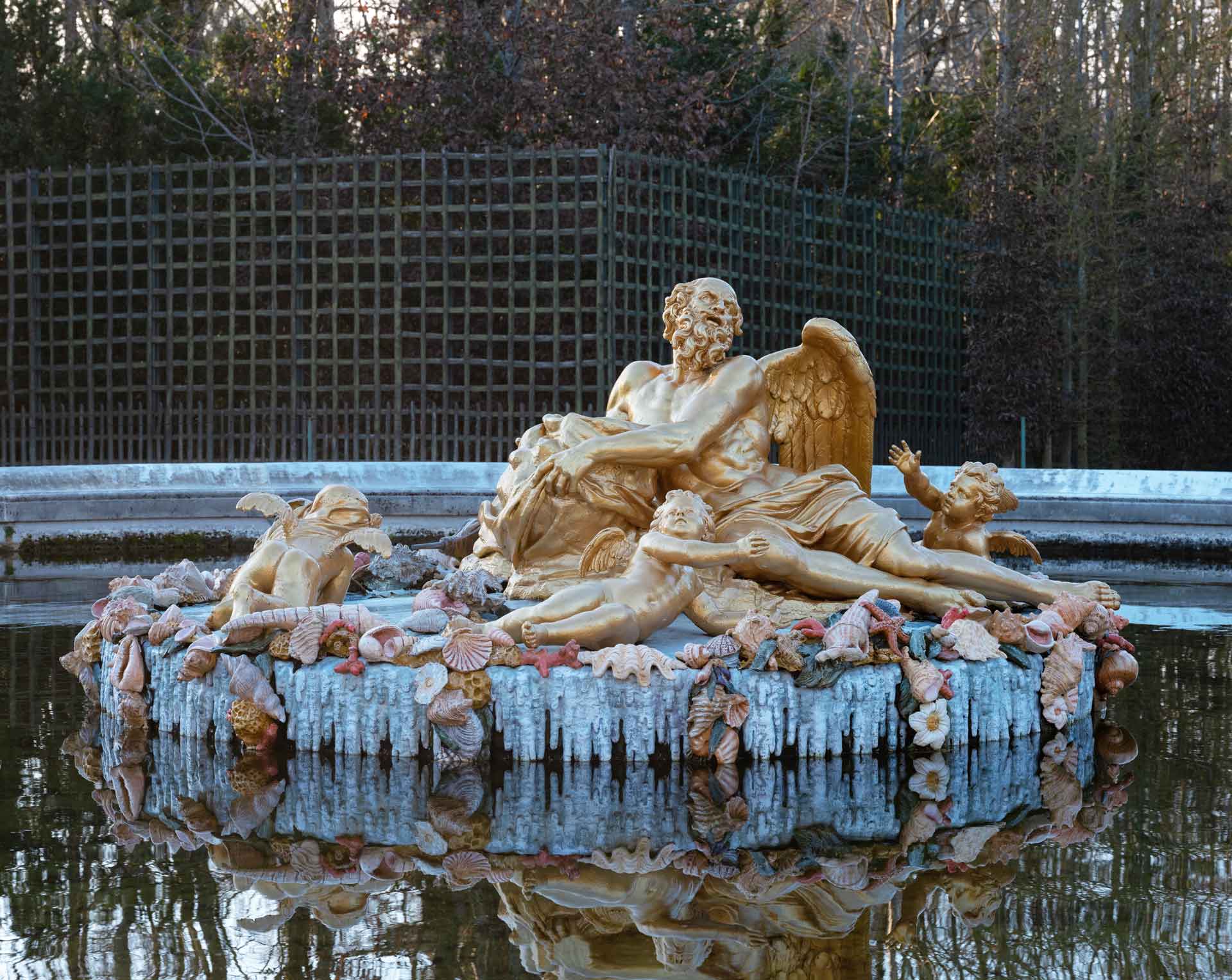
Entirely in symmetry with the Flora Fountain, the Saturn Fountain in the south of the gardens was sculpted by François Girardon and symbolises winter. Saturn sits on a throne in the centre, surrounded by cupids, on an island dotted with seashells.
Mirror Pool
Ballroom
The Colonnade Grove
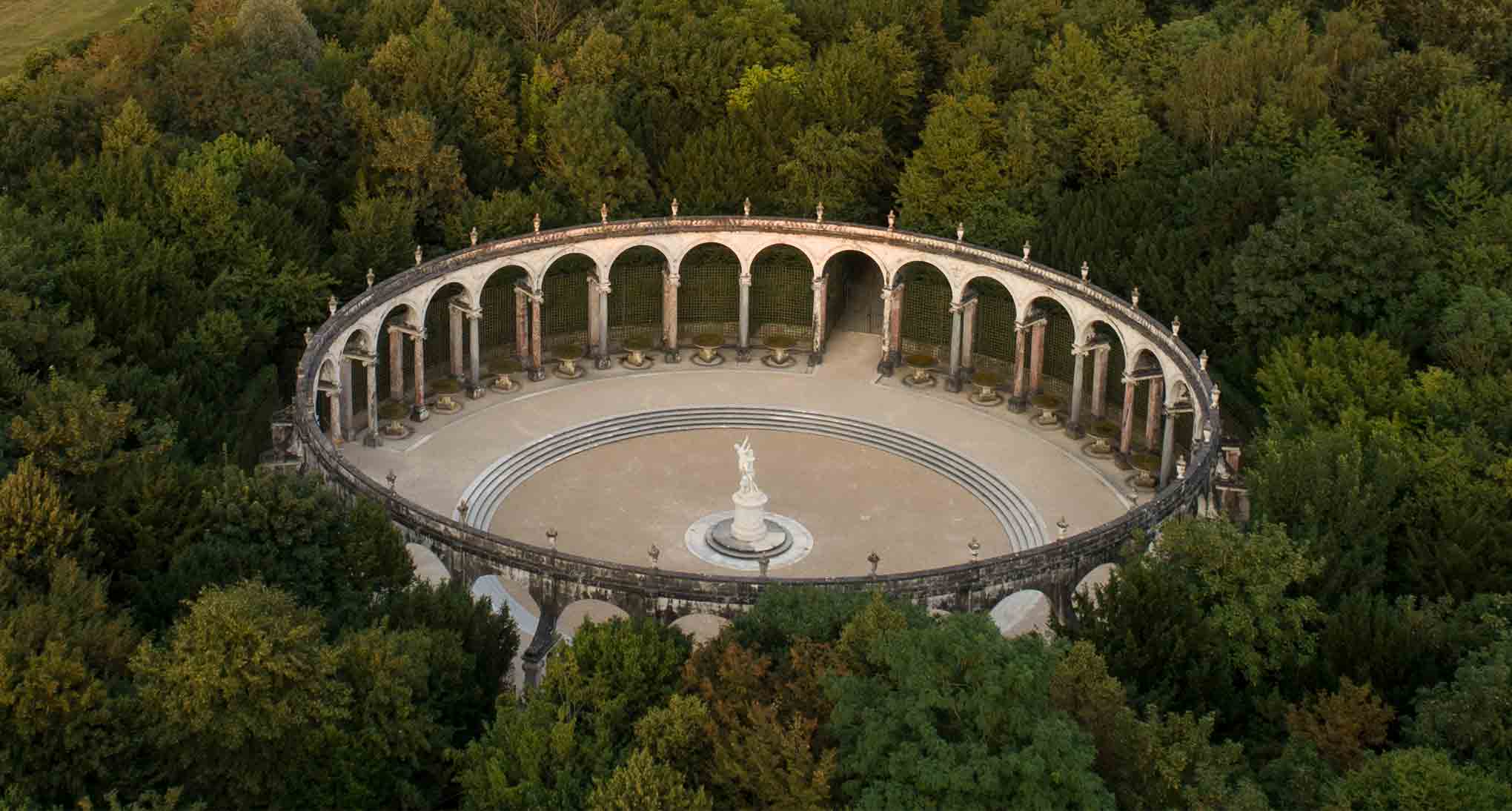
Queen's Grove
Constructed on the site of the former Maze created by Charles Perrault, the Queen's Grove was specially created in 1776 for Queen Marie-Antoinette, so that she would have somewhere to walk, away from visitors. It was originally designed in the landscaped style that was popular in the gardens of the 18th century. To create this flower garden, several non-native, particularly North American, species introduced to France in the 18th century, such as the Virginia tulip tree and white fringetree, were acclimated.
Following a two-year restoration effort, the Queen’s Grove has been unveiled to the public on 14 June 2021.
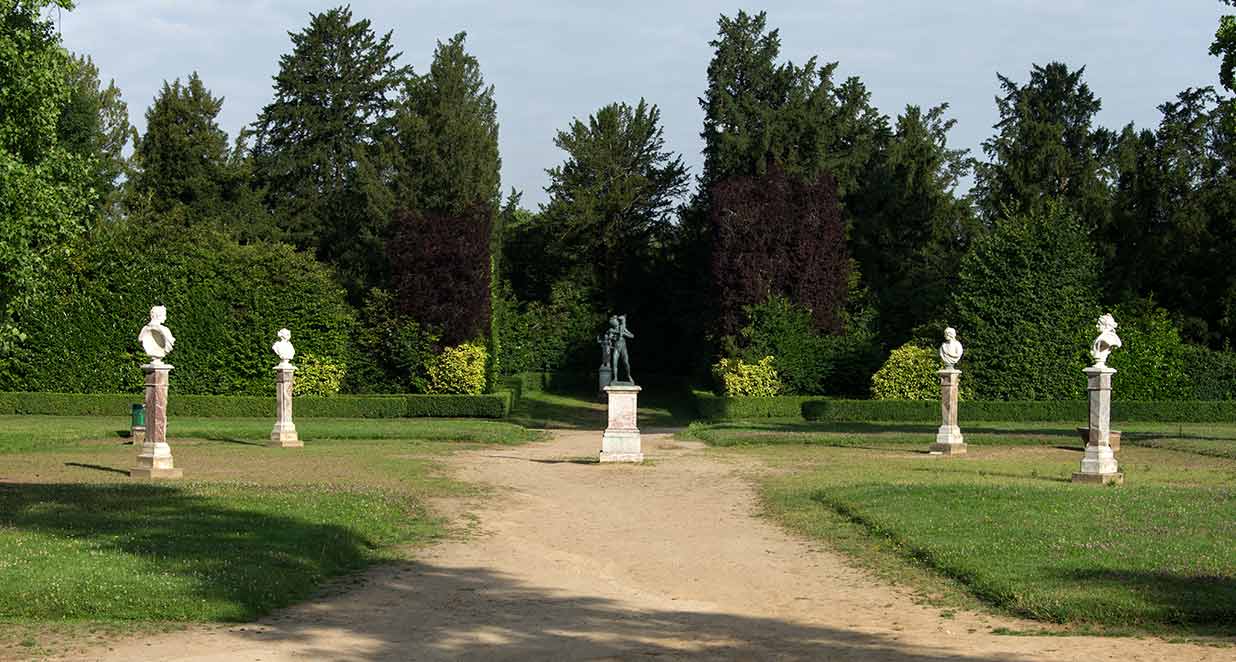
King's Garden
The architect Dufour created the enclosed King's Garden in 1817, under orders from Louis XVIII, in an English style with many superb varieties that were sadly largely destroyed in the storm of 1999. Only the original installation of the Mirror Fountain now remains.
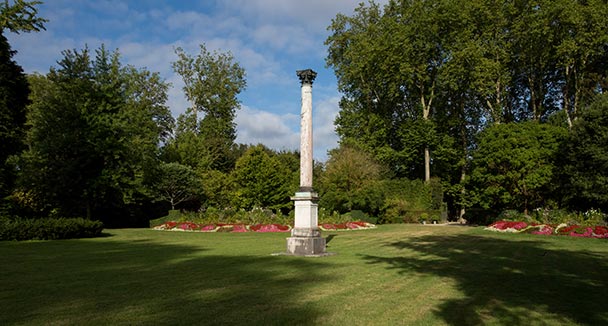
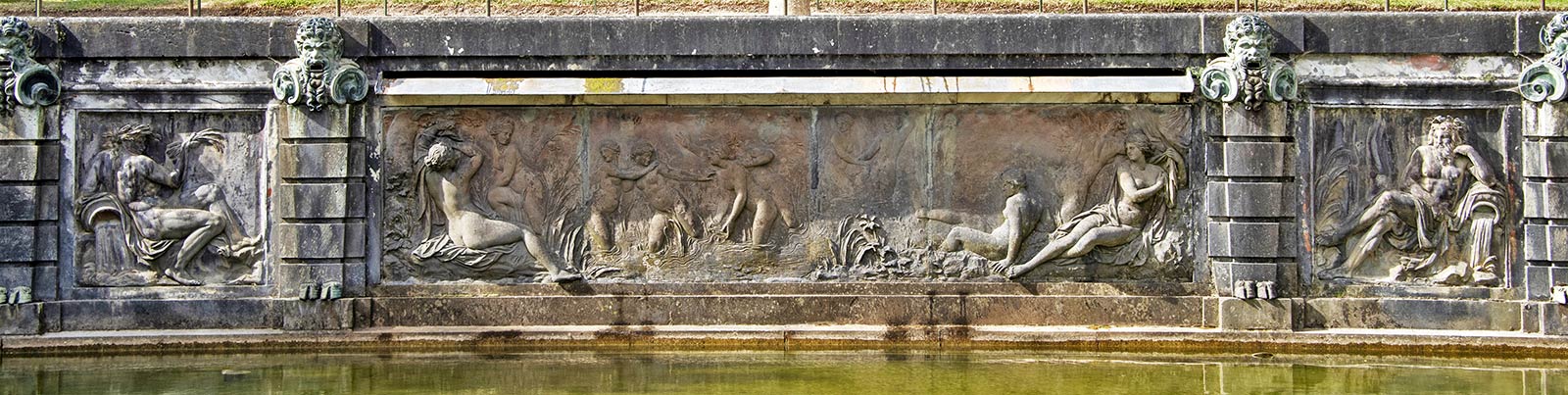
Nymphs' Bath
This fountain takes its name from the central bas-relief carved by François Girardon, called the Nymphs’ Bath. Originally gilded and sculpted in lead after a drawing by Charles Le Brun, the work represents female divinities associated with nature playing amid reeds.
Grove Of The Domes
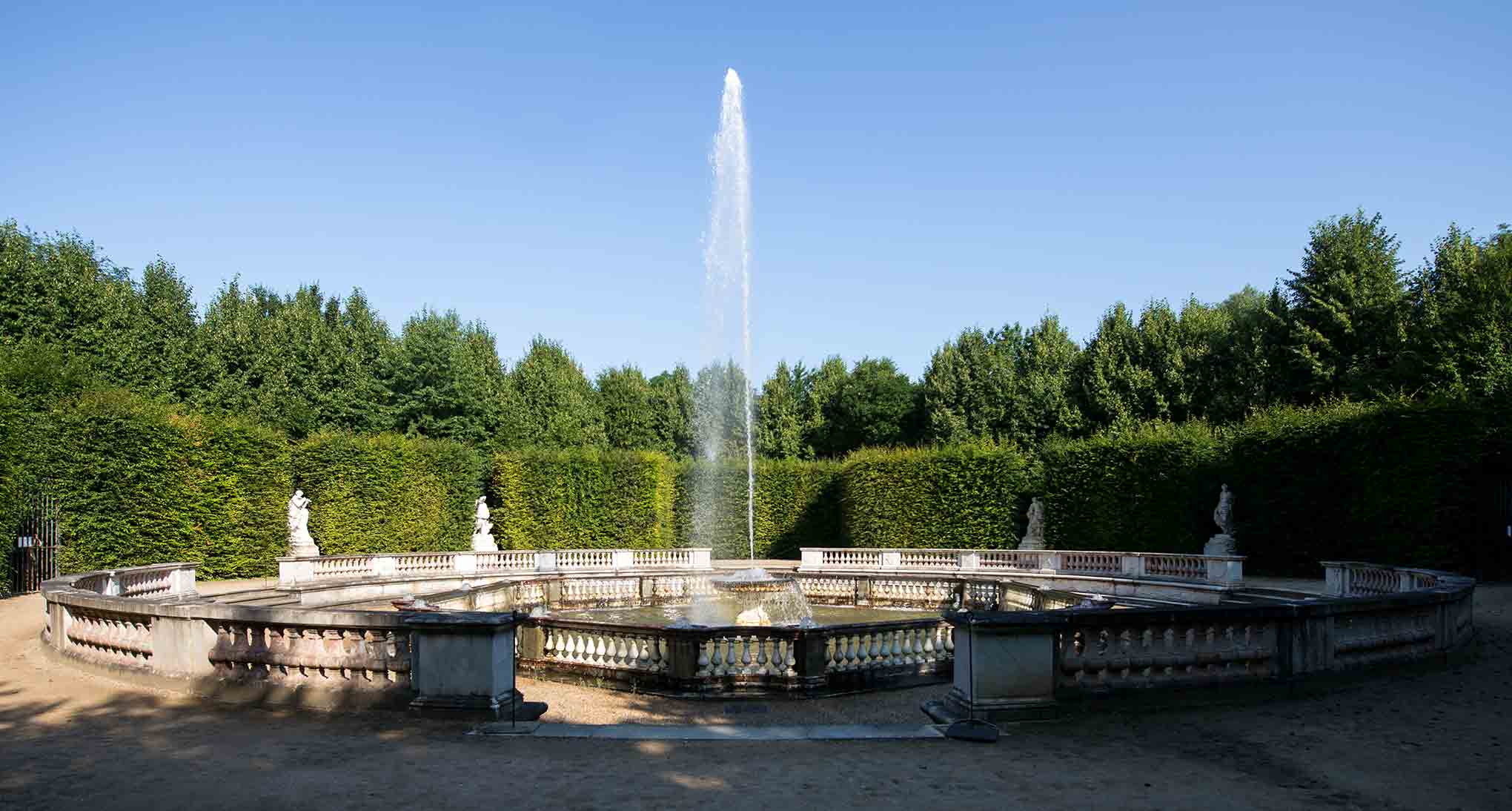
The Enceladus Grove
On the app, scroll down to interact with this sculpture thanks to AI!
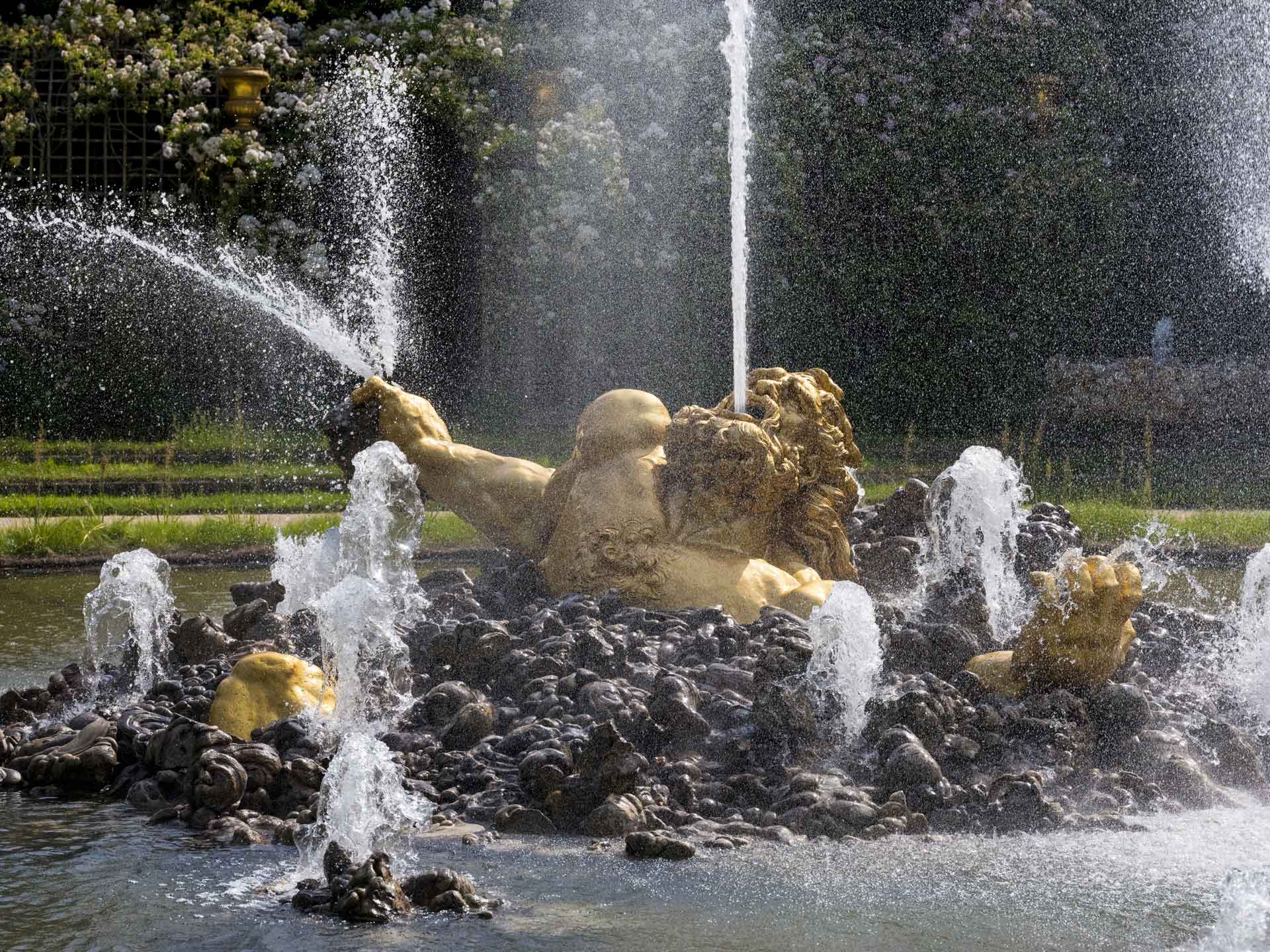
Water Theatre Grove
On the app, scroll down to interact with this sculpture thanks to AI!
Open every day - Access only from the Neptune fountain and North Parterre side. Due to a technical issue, the water shows at the Water Theatre Grove have been suspended.
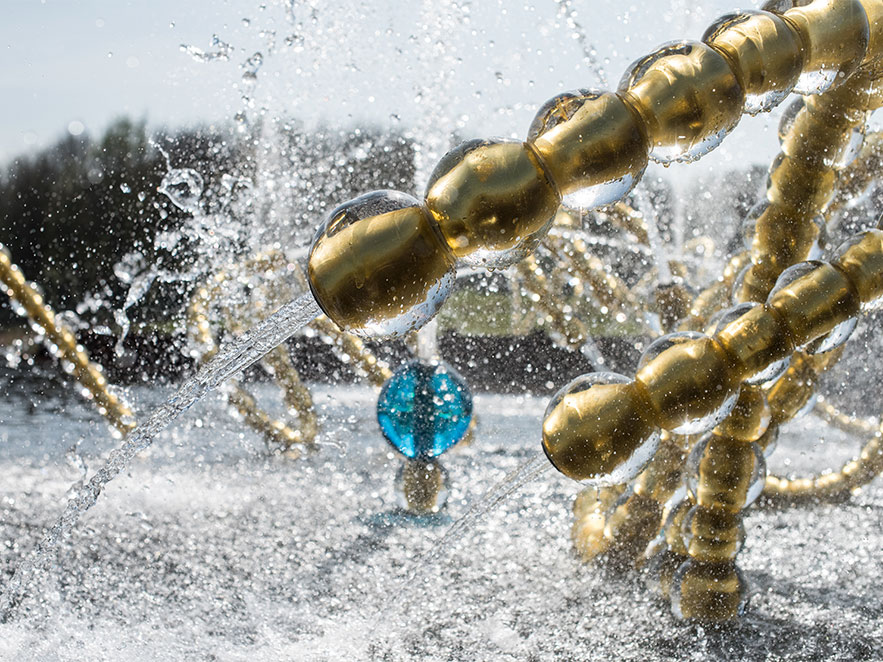
Star Grove
This grove was one of the first to be laid out by André Le Nôtre in the northern section of the gardens in 1666. The original design no longer exists.
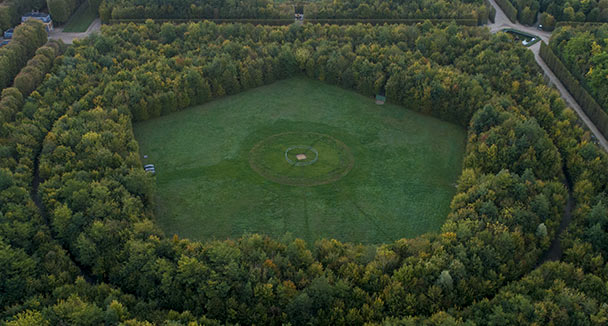
The Obelisk Grove
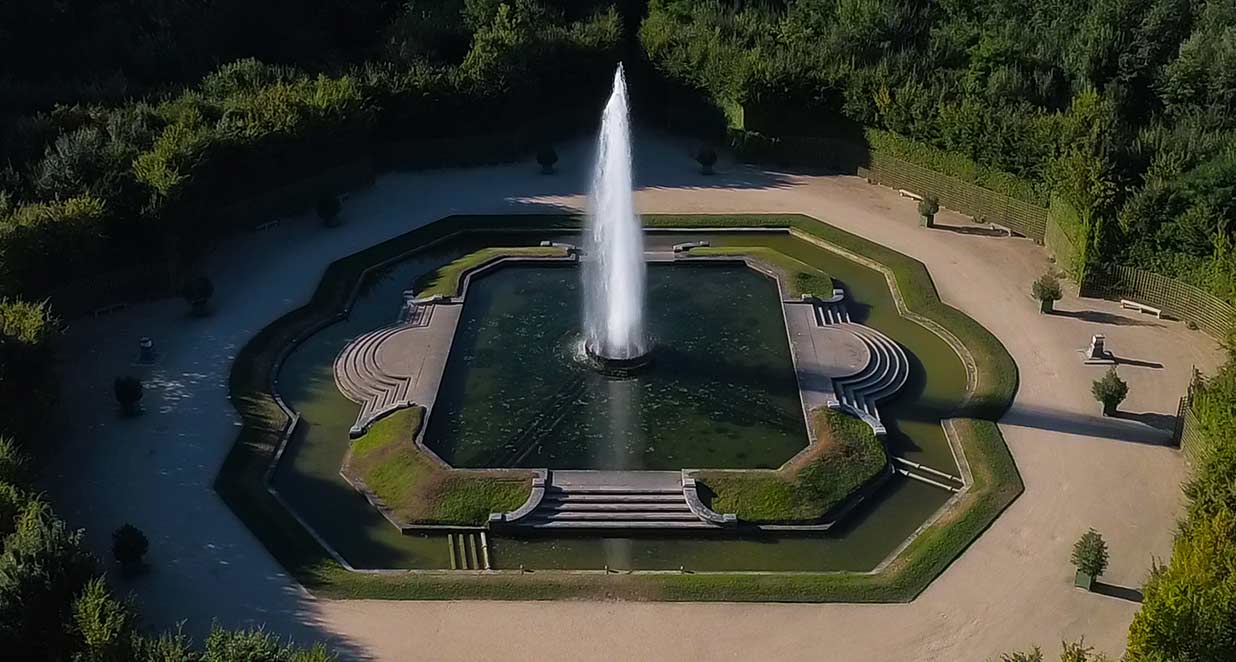
Grove Of The Three Fountains
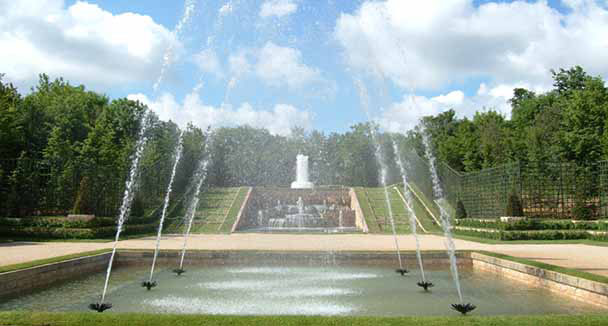
Ceres Fountain
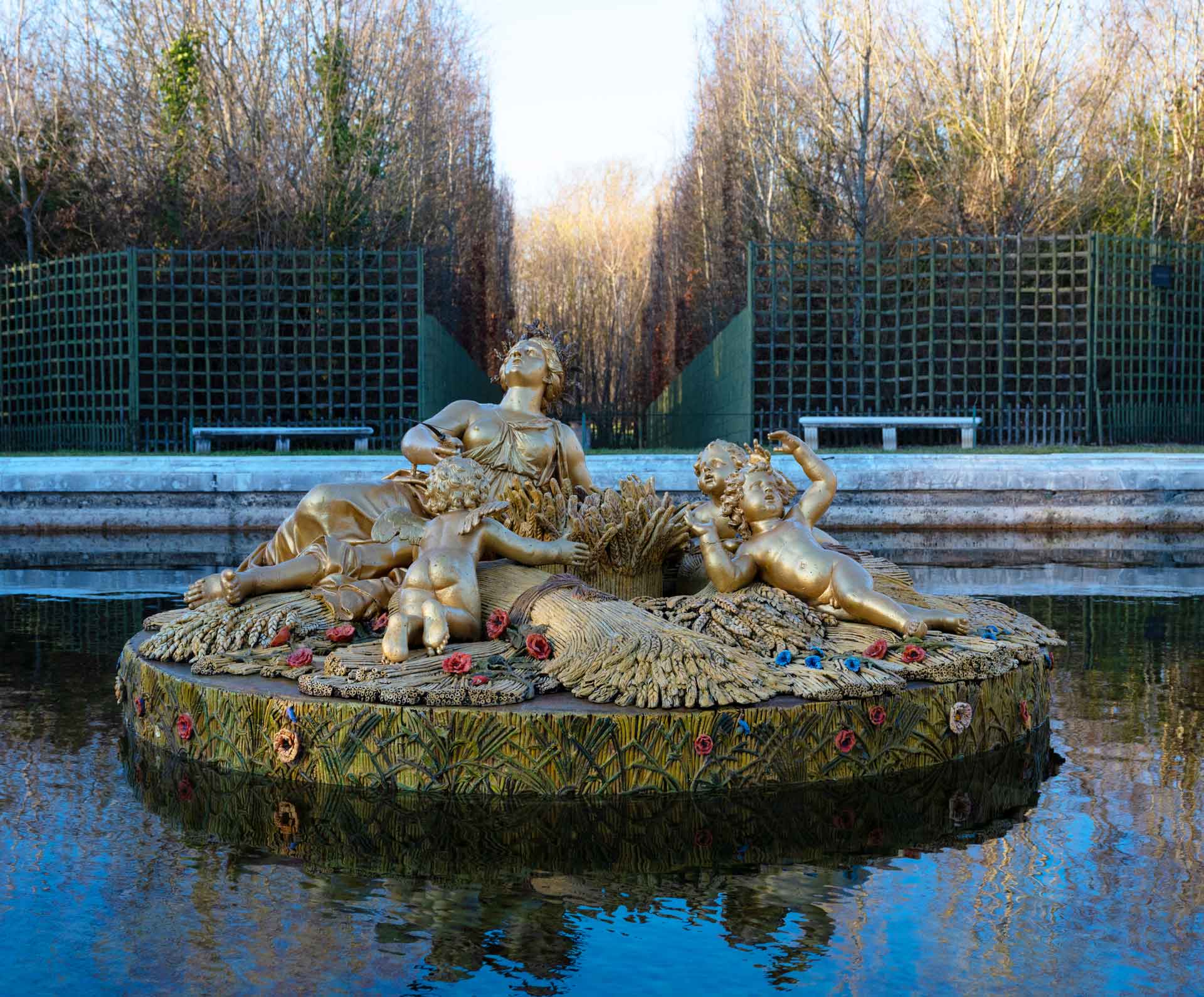
The square Ceres fountain was laid out between 1672 and 1679 by Thomas Regnaudin from a drawing by Charles Le Brun. Ceres, the Roman goddess of harvests, is seated on a bed of corn stalks, surrounded by cornflowers and roses. Symbolising summer, the fountain forms a group with those of Bacchus, Flora and Saturn, which represent the other three seasons.
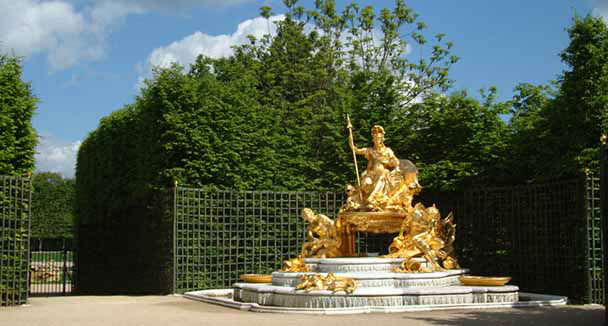
Triumphal Arch Grove
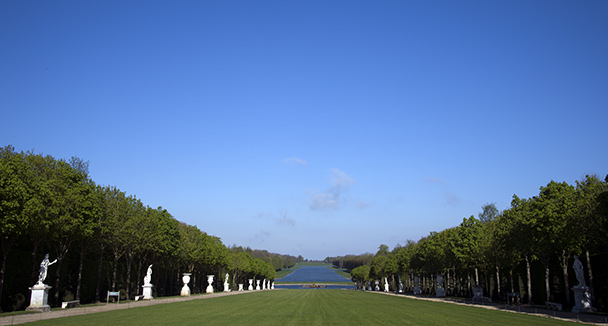
Great Lawn
Also known as the "Royal Walk", it gets its name from the expanse of grass that runs down the middle, the Great Lawn, that measures 335 metres in length and 40 metres in width. It was laid down under Louis XIII, but André Le Nôtre widened it and lined it with twelve statues and twelve vases, for the most part works sent by the Académie de France in Rome in the 17th century.
Dawn Fountain
The Point du Jour Fountain is decorated with animals in combat (a bloodhound attacking a stag and a tiger bringing down a bear) created by Houzeau. It is framed by three statues: Water by Le Gros (1681); Springtime by Magnier (1681); Le Point du Jour by Marsy (1680).

Night Fountain
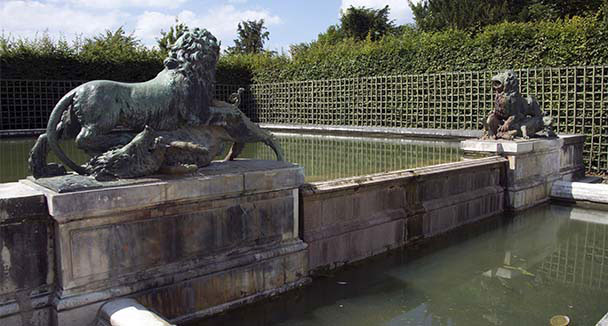
The Evening Fountain is decorated with animals in combat (a lion bringing down a wolf and a lion bringing down a boar) created by Corneille Van Clève and Jean Raon. It is framed by three statues: Evening by Desjardins (1680); L'Heure de Midi by G. Marsy (1680) and Air by Le Hongre (1685).
The Grand Canal
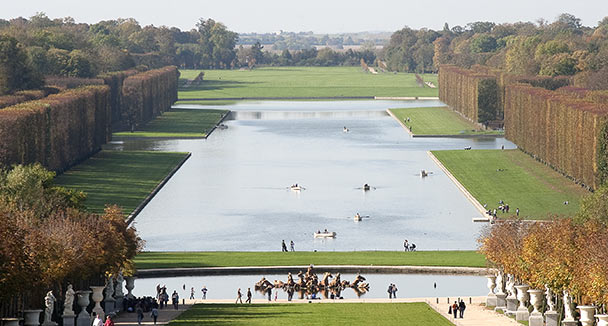
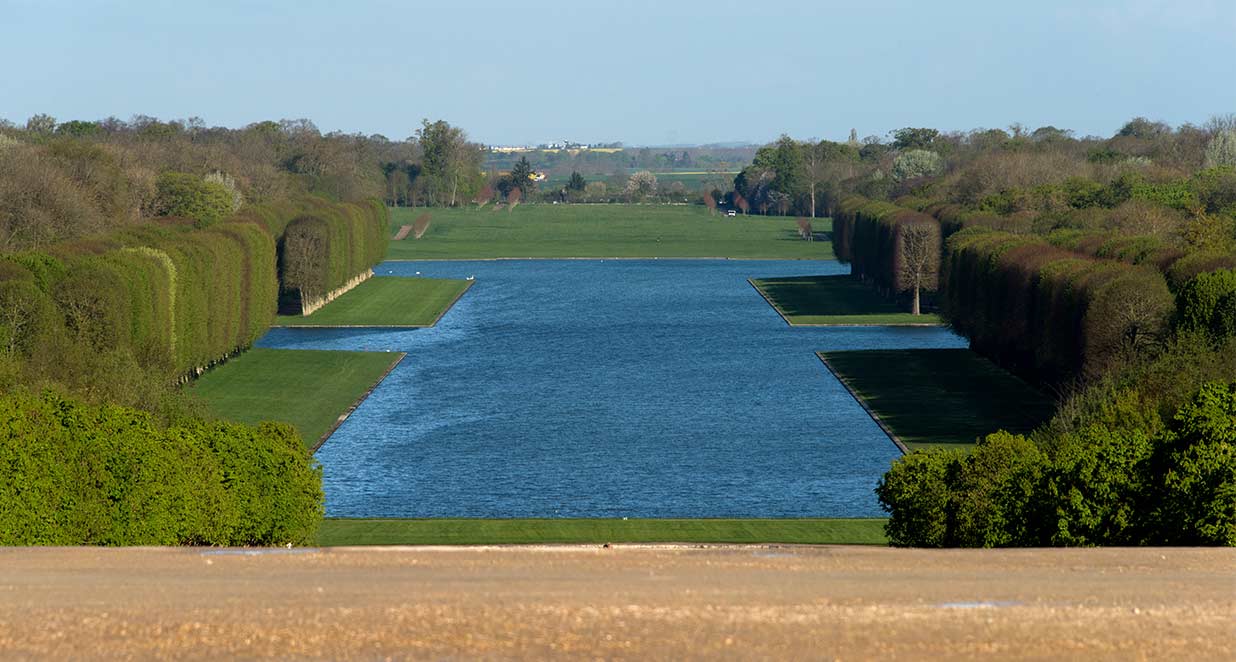
Dug between 1668 and 1679, the Grand Canal was André Le Nôtre’s most original creation. Covering an area of 23 hectares, measuring 60m wide and stretching out 1700m from east to west and 1000m from north to south, it allows the beauty and scale of the Estate to be admired in one go. Its dimensions were carefully calculated by Louis XIV’s architect to create the perfect perspective.
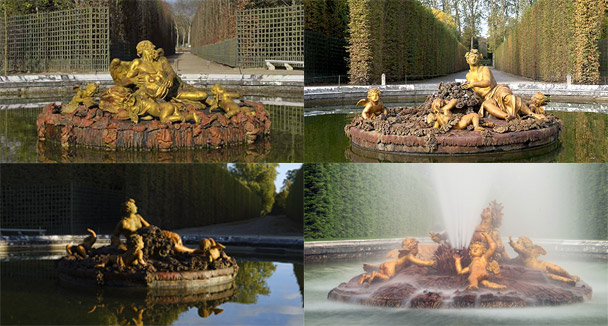
Golden Children's Pool
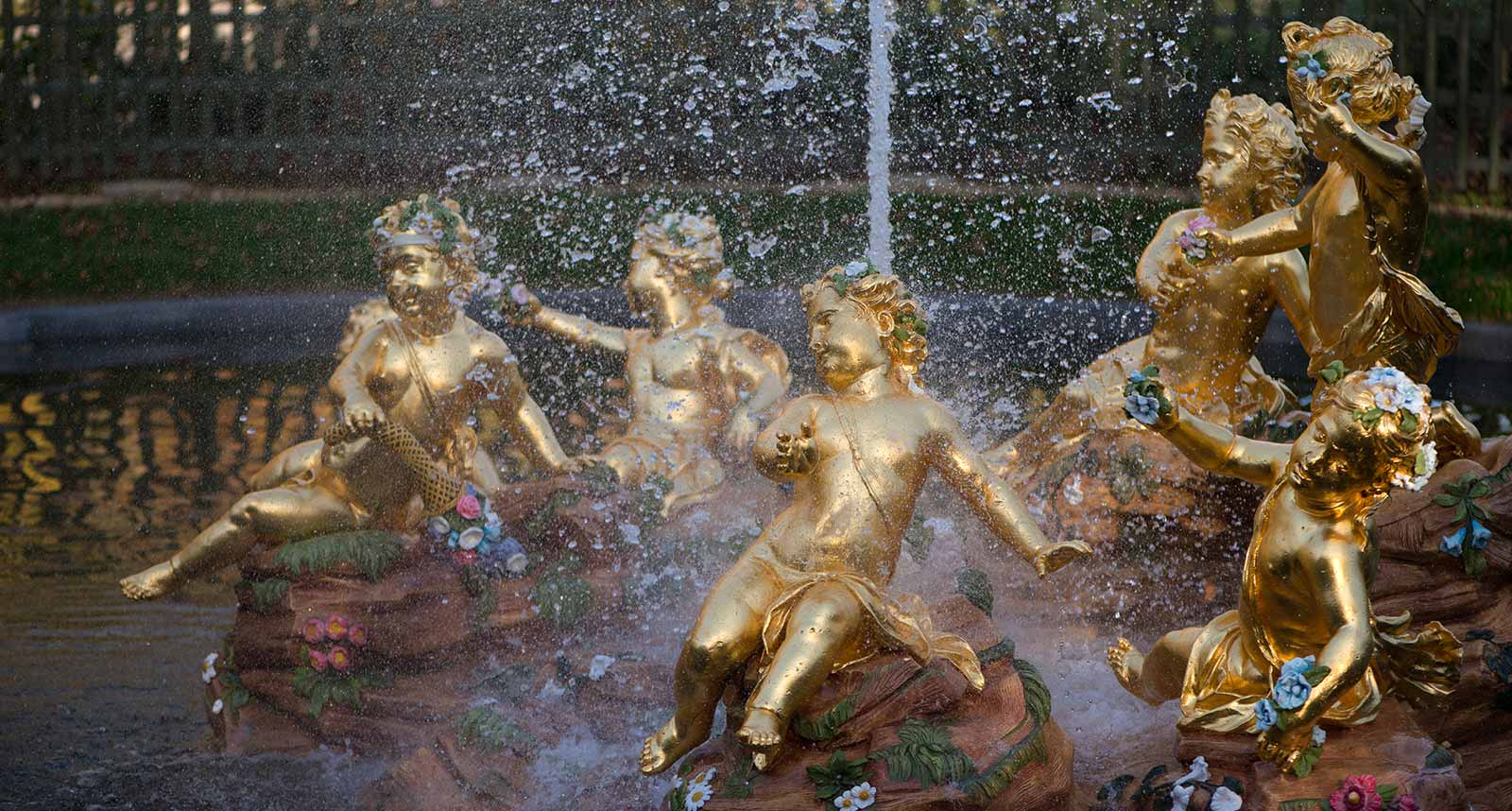
On the app, scroll down to interact with this sculpture thanks to AI!
The King’s Viewpoint
In the footsteps of Louis XIV, the “King’s Viewpoint” affords a view of all four Seasons Fountains with a simple turn of the head: Flora (Spring), Ceres (Summer), Bacchus (Autumn) and Saturn (Winter). Although not an easy task, the reward is worth the effort!
The Palace Terrace
The Palace terrace affords a unique view over the Grand Canal without the optical effect designed by André Le Nôtre, from which came the name “Grande Perspective”. It can be admired in full from the top of the steps leading to Latona's Fountain.
The Ballroom Grove
Open only in high season (April to October)

The Colonnade Grove
Enceladus Grove
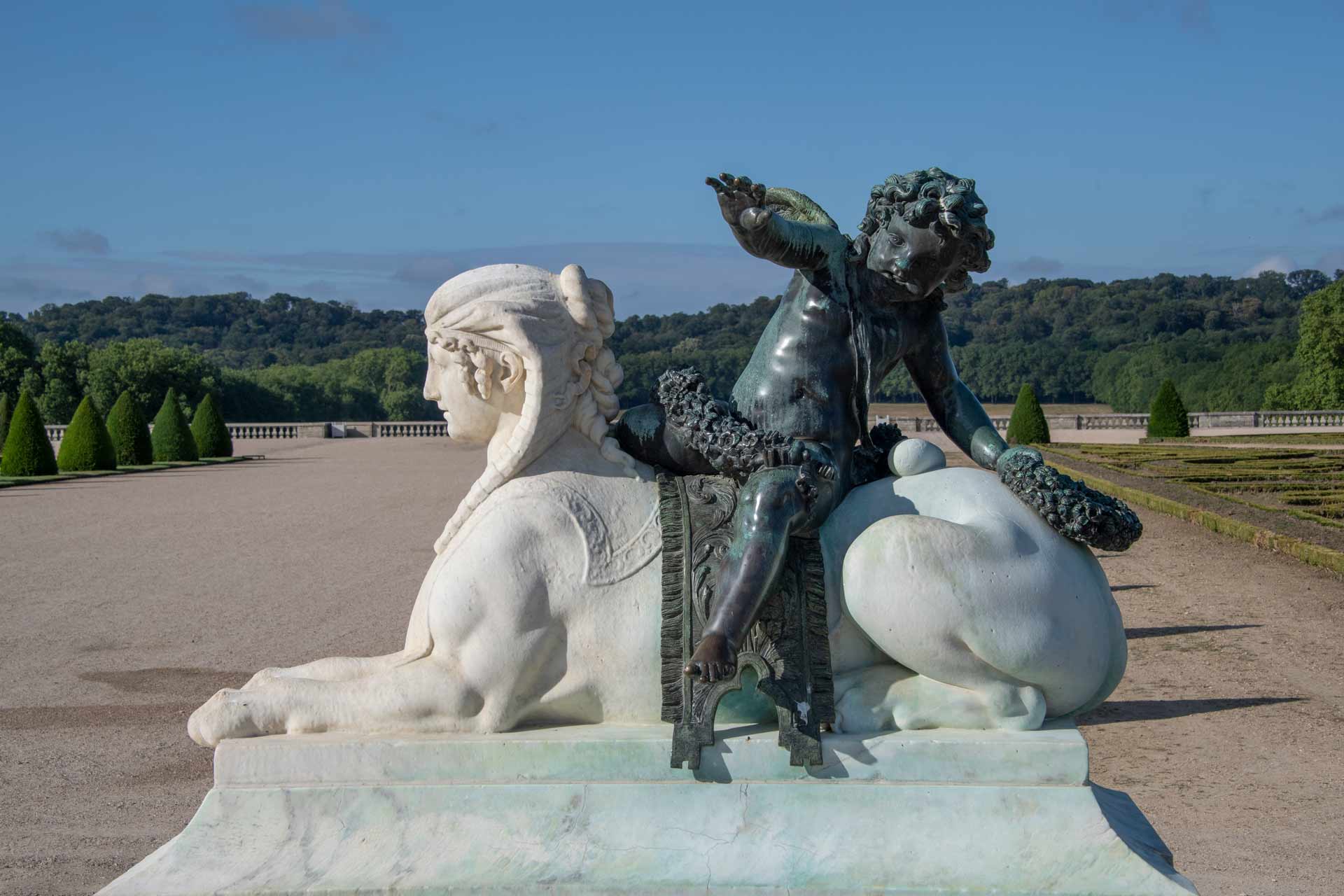
Sphinx Ridden By A Putto
On the app, scroll down to interact with this sculpture thanks to AI!
The Autumn Fountain
On the app, scroll down to interact with this sculpture thanks to AI!

The Enceladus Grove
On the app, scroll down to interact with this sculpture thanks to AI!
The Colonnade Grove
Ballroom
The Obelisk Grove
Apollo’s Baths Grove
Grove Of The Three Fountains
Triumphal Arch Grove
Where can I admire the Grand Perspective ?
We recommend viewing it from the Water Parterre at the top of the Latona Fountain steps.
Water Garden
The Water Garden appears to be an extension of the facade of the Palace. Their layout was modified several times before receiving its definitive form, in 1685. Each pool is decorated with statues of lying-down figures representing the rivers of France, accompanied by nymphs and children.
Latona's Fountain
On the app, scroll down to interact with this sculpture thanks to AI!
Apollo's Fountain
On the app, scroll down to interact with this sculpture thanks to AI!
Great Lawn
Also known as the "Royal Walk", it gets its name from the expanse of grass that runs down the middle, the Great Lawn, that measures 335 metres in length and 40 metres in width. It was laid down under Louis XIII, but André Le Nôtre widened it and lined it with twelve statues and twelve vases, for the most part works sent by the Académie de France in Rome in the 17th century.
The Grand Canal
Dug between 1668 and 1679, the Grand Canal was André Le Nôtre’s most original creation. Covering an area of 23 hectares, measuring 60m wide and stretching out 1700m from east to west and 1000m from north to south, it allows the beauty and scale of the Estate to be admired in one go. Its dimensions were carefully calculated by Louis XIV’s architect to create the perfect perspective.
Where are the groves located?
Apollo’s Baths Grove
The Girandole Grove
The Dauphin’s Grove
Mirror Pool
Ballroom
The Colonnade Grove
Chestnut Room
Currently closed
Queen's Grove
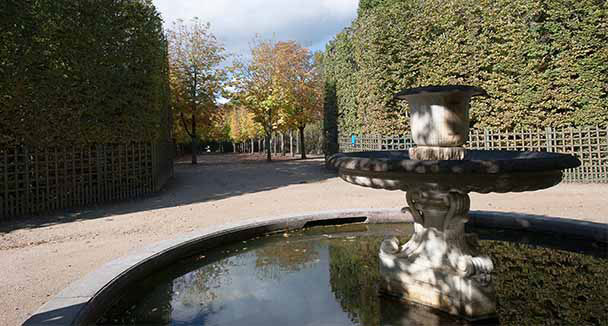
Constructed on the site of the former Maze created by Charles Perrault, the Queen's Grove was specially created in 1776 for Queen Marie-Antoinette, so that she would have somewhere to walk, away from visitors. It was originally designed in the landscaped style that was popular in the gardens of the 18th century. To create this flower garden, several non-native, particularly North American, species introduced to France in the 18th century, such as the Virginia tulip tree and white fringetree, were acclimated.
Following a two-year restoration effort, the Queen’s Grove has been unveiled to the public on 14 June 2021.
King's Garden
The architect Dufour created the enclosed King's Garden in 1817, under orders from Louis XVIII, in an English style with many superb varieties that were sadly largely destroyed in the storm of 1999. Only the original installation of the Mirror Fountain now remains.
Grove Of The Domes
The Enceladus Grove
On the app, scroll down to interact with this sculpture thanks to AI!
Water Theatre Grove
On the app, scroll down to interact with this sculpture thanks to AI!
Open every day - Access only from the Neptune fountain and North Parterre side. Due to a technical issue, the water shows at the Water Theatre Grove have been suspended.
Star Grove
This grove was one of the first to be laid out by André Le Nôtre in the northern section of the gardens in 1666. The original design no longer exists.
The Obelisk Grove
Grove Of The Three Fountains
Triumphal Arch Grove
The Enceladus Grove
On the app, scroll down to interact with this sculpture thanks to AI!
The Colonnade Grove
Ballroom
The Obelisk Grove
Apollo’s Baths Grove
Grove Of The Three Fountains
Triumphal Arch Grove
Where is the Orangerie located? Where are the parterres?
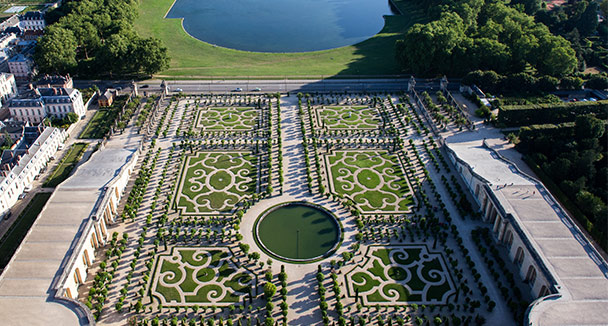
At the foot of the Palace, the Orangerie is one of the best examples of Jules Hardouin-Mansart's great talent as an architect, due to its size, its height and the purity of its alignments. Orange trees from Portugal, Spain and Italy and lemon and pomegranate trees. Some of the trees are over 200 years old. During winter, pink laurels and palm trees are kept there.
During the Fountains Night Show visitors can enter in the Orangerie.
North Parterre
The North Parterre, situated in front of the King's Grand Apartment, is surrounded by eighteen sculptures, of which fifteen date back to the great commission of 1674. The iconography evokes the myth of Apollo and his nurturing and influential journey around the globe.
Water Garden
The Water Garden appears to be an extension of the facade of the Palace. Their layout was modified several times before receiving its definitive form, in 1685. Each pool is decorated with statues of lying-down figures representing the rivers of France, accompanied by nymphs and children.
South Garden
Formerly known as the Flowers Parterre, the South Garden is situated above the Orangerie. During the reign of Louis XIV, brightly-coloured flowers were continually planted and replanted here: wallflowers, hyacinths, jasmine, tulips...
The Orangery Garden
Latona's Fountain
On the app, scroll down to interact with this sculpture thanks to AI!
Where is the Neptune Fountain located?
Located below the Parterre Nord this fountain, inaugurated by Louis XV, was a source of admiration given the number, size and variety of its water sprays that interplay with the lead sculptures. It has ninety-nine water features comprising an extraordinary hydraulic system. The waters are turned on in this fountain for the finale of the Fountain Show.
Neptune Fountain
On the app, scroll down to interact with this sculpture thanks to AI!
Where are the other fountains?
Latona Fountain, Bacchus Fountain, Apollo Fountain, Saturn Fountain...
Even more than the plant architecture and the groves, water in all its forms is the privileged ornament in the French gardens: water cascading into certain groves, water spouting from fountains, the quiet water of the large ponds reflecting the sky and light, such as in the Water Parterre and the Grand Canal.
Dragon Fountain
The Dragon Fountain represents an episode from Apollonian legend: The young Apollo kills the serpent Python with an arrow. The reptile is surrounded by dolphins and Cupids with bows and arrows, riding on swans. The main fountain reaches twenty seven metres in height.
Latona's Fountain
On the app, scroll down to interact with this sculpture thanks to AI!
Apollo's Fountain
On the app, scroll down to interact with this sculpture thanks to AI!
The Pyramid Fountain
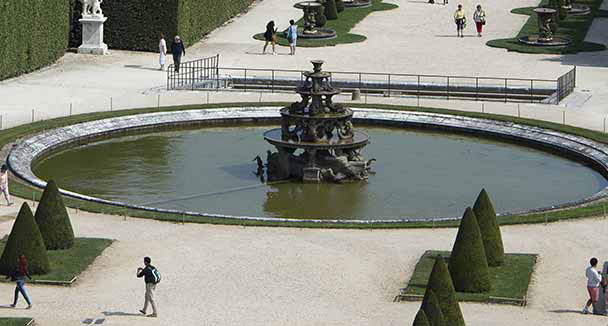
Created by the sculptor François Girardon from a drawing by Charles Le Brun, the pyramid took three years to complete. It consists of four stacked lead and marble basins, supported by tritons, dolphins and crayfish in lead. Previously gilded, the sculpture is crowned by the mythological figure of Triton, worshipped by sailors.
Neptune Fountain
On the app, scroll down to interact with this sculpture thanks to AI!
Flora Fountain
The Flora Fountain is located at the crossroads of several groves, including the Queen's Grove. Flora is the Roman goddess of flowers, gardens and springtime, and the fountain symbolises the first season of the year. Sculpted by Jean-Baptiste Tuby, the goddess can be found at the centre of the fountain, wearing a floral crown.
Saturn Fountain
Entirely in symmetry with the Flora Fountain, the Saturn Fountain in the south of the gardens was sculpted by François Girardon and symbolises winter. Saturn sits on a throne in the centre, surrounded by cupids, on an island dotted with seashells.
Mirror Pool
Nymphs' Bath
This fountain takes its name from the central bas-relief carved by François Girardon, called the Nymphs’ Bath. Originally gilded and sculpted in lead after a drawing by Charles Le Brun, the work represents female divinities associated with nature playing amid reeds.
Ceres Fountain
The square Ceres fountain was laid out between 1672 and 1679 by Thomas Regnaudin from a drawing by Charles Le Brun. Ceres, the Roman goddess of harvests, is seated on a bed of corn stalks, surrounded by cornflowers and roses. Symbolising summer, the fountain forms a group with those of Bacchus, Flora and Saturn, which represent the other three seasons.
Dawn Fountain
The Point du Jour Fountain is decorated with animals in combat (a bloodhound attacking a stag and a tiger bringing down a bear) created by Houzeau. It is framed by three statues: Water by Le Gros (1681); Springtime by Magnier (1681); Le Point du Jour by Marsy (1680).
Night Fountain
The Evening Fountain is decorated with animals in combat (a lion bringing down a wolf and a lion bringing down a boar) created by Corneille Van Clève and Jean Raon. It is framed by three statues: Evening by Desjardins (1680); L'Heure de Midi by G. Marsy (1680) and Air by Le Hongre (1685).
Water Walk (Marmousets Alley)
The Water walk connects the Nymph's bath and the Dragon Fountain, which precedes the larger Neptune Fountain to the west of the Palace. This network of avenues, which divides the gardens of Versailles, serve as green walls.
What time are the fountain shows?
Every Saturdays and Sundays from April to October, enjoy The Musical Gardens and explore the fountains and groves with their water features.
Due to high temperatures, the water display of the fountains is changed.
- The water jets are lowered all day long
- The water display of the fountains is now rotating
All day long:
- Water display of the Mirror Pool every 10 minutes
- Water display of the Neptune Foutain every 15 minutes
- Water display of the Water Theater Grove continuously
In the morning: water display of the southern groves
From 11.00 am to 12.00 am: water display of the Great Perspective
From 11.15 am to 11.45 am: water display of the Ballroom, Bacchus and Saturn’s fountains, the Colonnade and Girandole Groves’ fountains
Afternoon: water display northern groves
From 3.30 pm to 4.30 pm: water display of the Three Fountains Grove, the Pyramid foutain, the Mermaid, Water Alley and Golden children’s fountains as well as Ceres and Flora fountains, and the Girandole groves
At 4.00 pm: water display of the Great Perspective and the Dauphin’s Grove
From 3.30 pm to 5.00 pm: water display of the Enceladus and Appolon’s baths grove
At 5:20 pm: final at Neptune Fountain (water display on the last minutes of the music)
Water Garden
The Water Garden appears to be an extension of the facade of the Palace. Their layout was modified several times before receiving its definitive form, in 1685. Each pool is decorated with statues of lying-down figures representing the rivers of France, accompanied by nymphs and children.
Dragon Fountain
The Dragon Fountain represents an episode from Apollonian legend: The young Apollo kills the serpent Python with an arrow. The reptile is surrounded by dolphins and Cupids with bows and arrows, riding on swans. The main fountain reaches twenty seven metres in height.
Latona's Fountain
On the app, scroll down to interact with this sculpture thanks to AI!
The Girandole Grove
Apollo's Fountain
On the app, scroll down to interact with this sculpture thanks to AI!
Neptune Fountain
On the app, scroll down to interact with this sculpture thanks to AI!
Flora Fountain
The Flora Fountain is located at the crossroads of several groves, including the Queen's Grove. Flora is the Roman goddess of flowers, gardens and springtime, and the fountain symbolises the first season of the year. Sculpted by Jean-Baptiste Tuby, the goddess can be found at the centre of the fountain, wearing a floral crown.
Saturn Fountain
Entirely in symmetry with the Flora Fountain, the Saturn Fountain in the south of the gardens was sculpted by François Girardon and symbolises winter. Saturn sits on a throne in the centre, surrounded by cupids, on an island dotted with seashells.
Mirror Pool
Ballroom
The Colonnade Grove
Water Theatre Grove
On the app, scroll down to interact with this sculpture thanks to AI!
Open every day - Access only from the Neptune fountain and North Parterre side. Due to a technical issue, the water shows at the Water Theatre Grove have been suspended.
Ceres Fountain
The square Ceres fountain was laid out between 1672 and 1679 by Thomas Regnaudin from a drawing by Charles Le Brun. Ceres, the Roman goddess of harvests, is seated on a bed of corn stalks, surrounded by cornflowers and roses. Symbolising summer, the fountain forms a group with those of Bacchus, Flora and Saturn, which represent the other three seasons.
Golden Children's Pool
On the app, scroll down to interact with this sculpture thanks to AI!